单例模式:一个“唯一”的倔强
你可能天天在用,却从没想过它为什么这么设计 —— 单例模式,创建型模式里的“钉子户”
开篇:一个类,只能有一个“我”
你有没有遇到过这种场景:某个类在系统里只应该有一份,比如配置管理器、日志记录器、数据库连接池?如果一不小心 new 出两个,轻则资源浪费,重则数据错乱。
这时候,单例模式(Singleton Pattern)就登场了。它的核心思想异常简单:确保一个类只有一个实例,并提供一个全局访问点。
听起来像是个“皇帝”模式 —— 天下只能有一个皇帝,而且人人都知道去哪找到他。
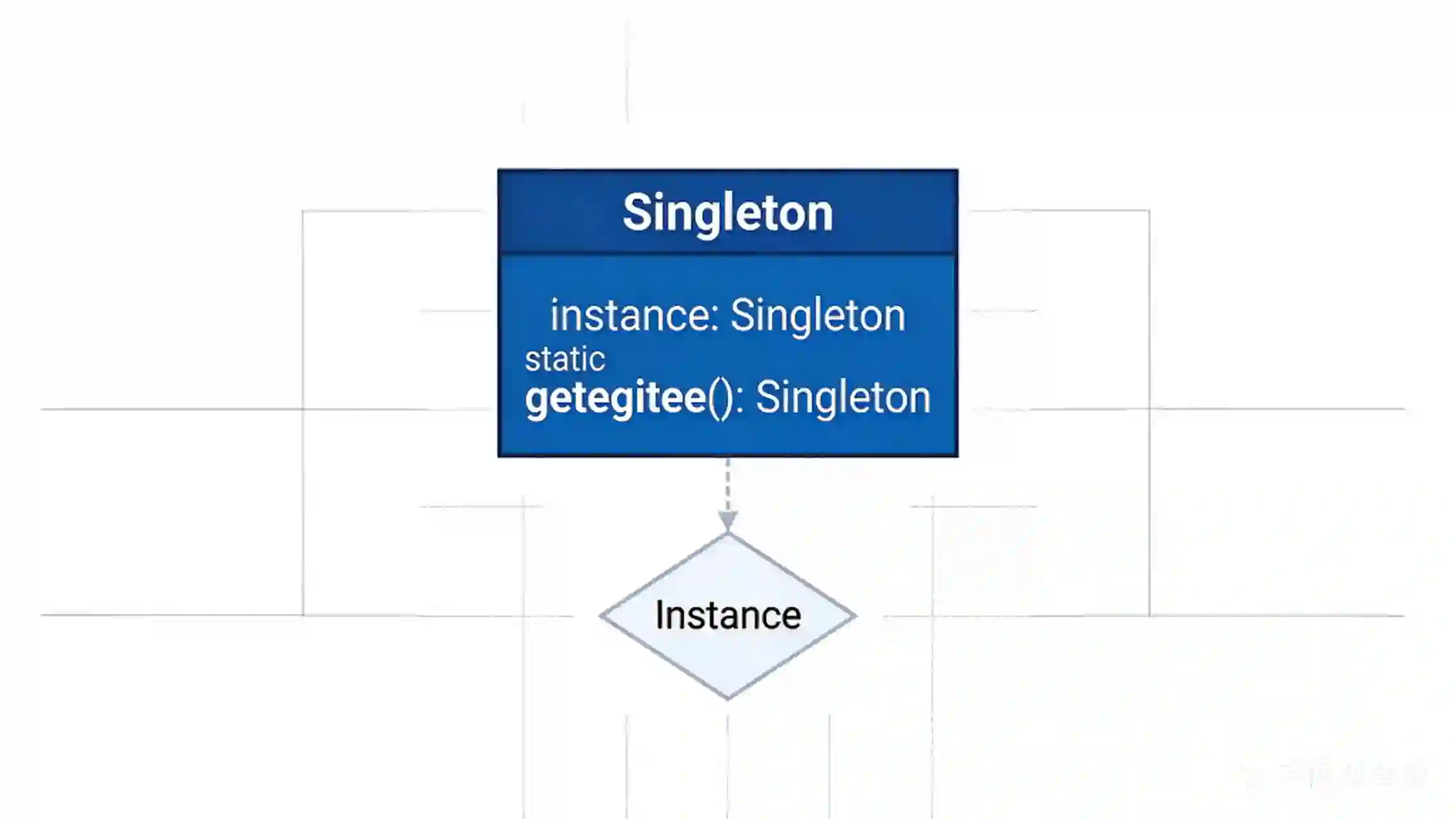
一张图看懂
角色就两个:
- Singleton:自己管自己,私有构造,静态方法返回唯一实例
- Client:想用?别 new,直接
getInstance()拿
怎么实现?多种语言,多种姿势
单例的实现有很多变种,核心分歧就两点:何时创建(懒汉 vs 饿汉)和是否线程安全。下面我用几种主流语言展示,让你一次看个够。
Python —— 魔术方法
python
class Singleton:
    _instance = None
    def __new__(cls):
        if cls._instance is None:
            cls._instance = super().__new__(cls)
return cls._instance装饰器版本更 Pythonic:
python
def singleton(cls):
    instances = {}
    def get_instance(*args, **kwargs):
        if cls not in instances:
            instances[cls] = cls(*args, **kwargs)
        return instances[cls]
    return get_instance

@singleton
class MyClass: passJavaScript —— 构造函数拦截
javascript
class Singleton {
    constructor() {
        if (Singleton.instance) return Singleton.instance;
        Singleton.instance = this;
    }
}IIFE 闭包方式也很常见:
javascript
const SingletonIIFE = (function() {
    let instance;
    function createInstance() { /* ... */ }
    return {
        getInstance: function() {
            if (!instance) instance = createInstance();
            return instance;
        }
    };
})();TypeScript —— 类型安全的懒汉与饿汉
typescript
// 懒汉式
class Singleton {
    private static instance: Singleton;
    private constructor() {}
    public static getInstance(): Singleton {
        if (!Singleton.instance) {
            Singleton.instance = new Singleton();
        }
        return Singleton.instance;
    }
}

// 饿汉式
class EagerSingleton {
    private static readonly instance: EagerSingleton = new EagerSingleton();
    private constructor() {}
    public static getInstance(): EagerSingleton {
        return EagerSingleton.instance;
    }
}C# —— 推荐 Lazy<T>
csharp
public sealed class LazySingleton
{
    private static readonly Lazy<LazySingleton> lazy =
        new Lazy<LazySingleton>(() => new LazySingleton());
    public static LazySingleton Instance => lazy.Value;
    private LazySingleton() {}
}.NET 4+ 后这是最优雅、线程安全、延迟加载的方式。
什么时候该用它?
- 系统只需要一个实例,比如配置管理器、日志记录器、缓存。
- 创建对象成本很高,比如数据库连接池、线程池。
- 需要全局访问点,而且希望控制实例数量。
优点与槽点
👍 优点:
- 资源节约,避免重复创建
- 全局唯一访问点,用起来方便
- 自己管理生命周期
👎 缺点(别假装没看见):
- 违背单一职责原则 —— 又管业务又管实例创建
- 耦合增加,模块之间通过单例隐式依赖
- 单元测试噩梦,很难 mock 替换
- 多线程麻烦,要考虑双检锁、volatile、原子操作
- 内存常驻,可能导致内存泄漏(尤其移动端)
和那些“兄弟模式”的关系
- 工厂模式:工厂类本身常常做成单例
- 抽象工厂:同上
- 建造者模式:建造者也可以是单例
- 原型模式:这俩是死对头,一个要唯一,一个要复制
真实世界里的单例们
| 语言/框架 | 例子 |
|---|---|
| JavaScript | Redux store、Vuex store、React Context |
| TypeScript | Angular 服务(默认单例)、NestJS 的 @Injectable() 服务 |
| C# | ASP.NET Core 的 IConfiguration、ILogger(默认) |
| Python | Django 的配置对象、Flask app、SQLAlchemy Engine |
活学活用:各语言应用场景示例
JavaScript:全局状态管理
javascript
const GlobalState = (function() {
    let instance;
    let state = {};
    function createInstance() {
        return {
            setState(key, value) { state[key] = value; },
            getState(key) { return state[key]; },
            clearState() { state = {}; }
        };
    }
    return {
        getInstance() {
            if (!instance) instance = createInstance();
            return instance;
        }
    };
})();

// 使用
const s1 = GlobalState.getInstance();
const s2 = GlobalState.getInstance();
console.log(s1 === s2); // true
s1.setState('user', 'admin');
console.log(s2.getState('user')); // adminTypeScript:配置管理器
typescript
class ConfigManager {
    private static instance: ConfigManager;
    private config: Record<string, any> = {};
    private constructor() { this.loadConfig(); }
    private loadConfig() {
        this.config = {
            apiUrl: process.env.API_URL || 'https://api.example.com',
            timeout: parseInt(process.env.TIMEOUT || '5000'),
        };
    }
    public static getInstance() {
        if (!ConfigManager.instance) {
            ConfigManager.instance = new ConfigManager();
        }
        return ConfigManager.instance;
    }
    public get(key: string) { return this.config[key]; }
    public set(key: string, value: any) { this.config[key] = value; }
}

// 使用
const config = ConfigManager.getInstance();
console.log(config.get('apiUrl'));C#:日志管理器
csharp
public sealed class Logger
{
    private static readonly Logger instance = new Logger();
    private readonly string logFilePath;
    static Logger() { }
    private Logger() {
        logFilePath = Path.Combine(AppDomain.CurrentDomain.BaseDirectory, "app.log");
    }
    public static Logger Instance => instance;
    public void Log(string message) {
        string entry = $"[{DateTime.Now:yyyy-MM-dd HH:mm:ss}] {message}";
        lock (this) {
            File.AppendAllText(logFilePath, entry + Environment.NewLine);
        }
        Console.WriteLine(entry);
    }
}

// 使用
Logger.Instance.Log("Application started");Python:配置管理器
python
class ConfigManager:
    _instance = None
    _config = {}
    def __new__(cls):
        if cls._instance is None:
            cls._instance = super().__new__(cls)
            cls._load_config()
        return cls._instance
    @classmethod
    def _load_config(cls):
        import os
        cls._config = {
            'api_url': os.environ.get('API_URL', 'https://api.example.com'),
            'timeout': int(os.environ.get('TIMEOUT', '5000')),
        }
    def get(self, key, default=None):
        return self._config.get(key, default)
    def set(self, key, value):
        self._config[key] = value

# 使用
config = ConfigManager()
print(config.get('api_url'))写在最后
单例模式是设计模式里最“简单”的一个,也是被滥用最多的一个。它的核心价值在于控制实例数量,而不是“因为方便所以全局”。
如果你发现项目里到处都是单例,测试越来越难写,模块间耦合越来越紧 —— 那可能是时候审视一下,是否真的需要这么多“唯一”了。
用得好是利器,用不好是枷锁。 单例如此,设计模式皆如此。